<?xml version="1.0" encoding="utf-8"?>
<feed xmlns="http://www.w3.org/2005/Atom" xmlns:media="http://search.yahoo.com/mrss/">
    <title>Cody Cabana Productions</title>
    <link href="https://codycabanaproductions.com/feed.xml" rel="self" />
    <link href="https://codycabanaproductions.com" />
    <updated>2026-05-18T22:03:29-06:00</updated>
    <author>
        <name>Bill Cody</name>
    </author>
    <id>https://codycabanaproductions.com</id>

    <entry>
        <title>My QSL Card Saga  </title>
        <author>
            <name>Bill Cody</name>
        </author>
        <link href="https://codycabanaproductions.com/blog/my-qsl-card-saga-2/"/>
        <id>https://codycabanaproductions.com/blog/my-qsl-card-saga-2/</id>
            <category term="ham radio"/>

        <updated>2026-05-18T22:00:39-06:00</updated>
            <summary type="html">
                <![CDATA[
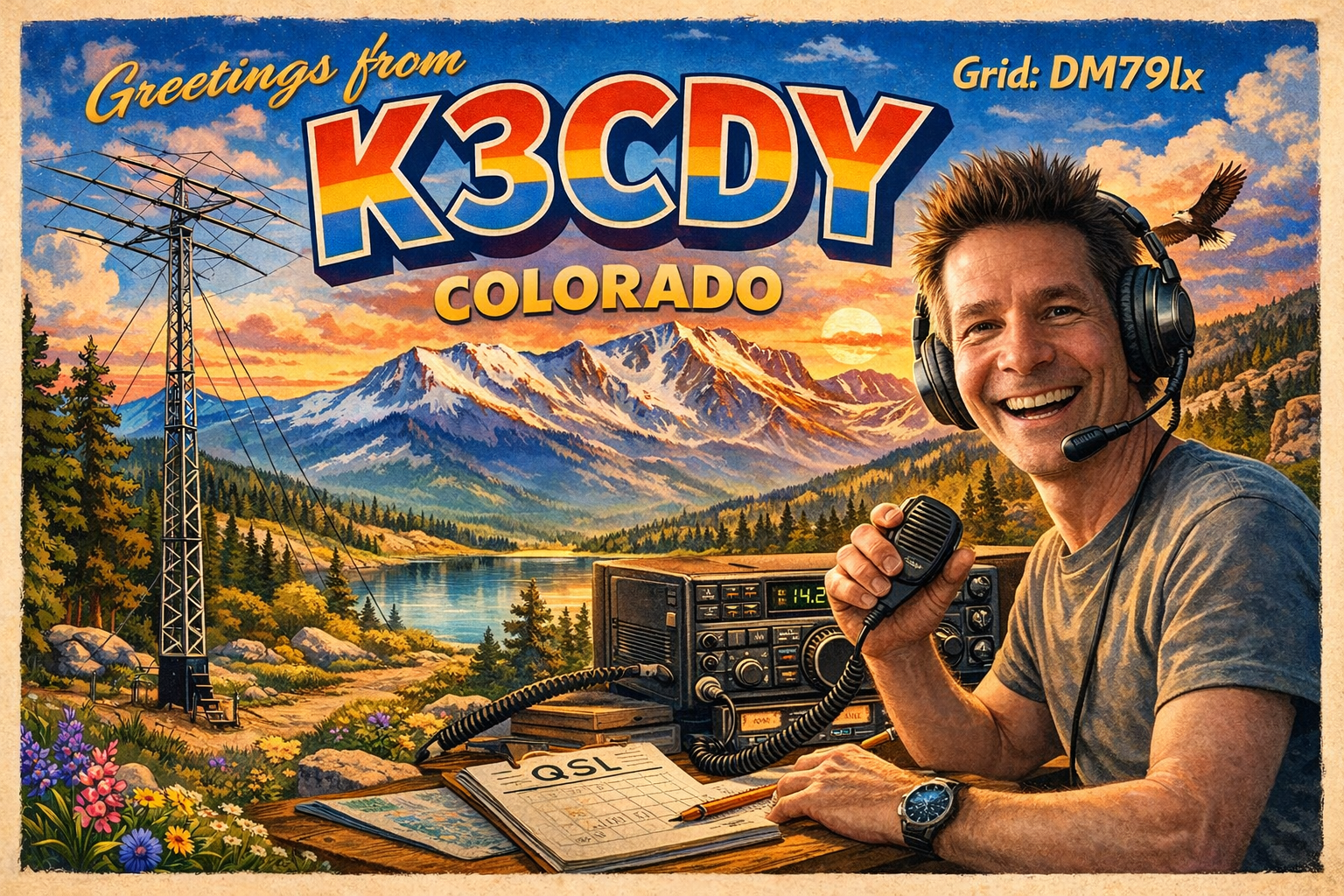
                    Now that's a pretty cool card, right? If you're a "ham" (a.k.a. amateur radio operator), you know exactly what this is. For those unfamiliar, it's a traditional way to prove you've had radio contact with another ham. Before the Internet, these cards were the only&hellip;
                ]]>
            </summary>
        <content type="html">
            <![CDATA[
                <figure class="post__image post__image--center"><img loading="lazy"  src="https://codycabanaproductions.com/media/posts/14/K3CDY-QSL-Card-V1.png" alt="K3CDY QSL Card" width="1536" height="1024" sizes="(max-width: 1920px) 100vw, 1920px" srcset="https://codycabanaproductions.com/media/posts/14/responsive/K3CDY-QSL-Card-V1-xs.png 640w ,https://codycabanaproductions.com/media/posts/14/responsive/K3CDY-QSL-Card-V1-sm.png 768w ,https://codycabanaproductions.com/media/posts/14/responsive/K3CDY-QSL-Card-V1-md.png 1024w ,https://codycabanaproductions.com/media/posts/14/responsive/K3CDY-QSL-Card-V1-lg.png 1366w ,https://codycabanaproductions.com/media/posts/14/responsive/K3CDY-QSL-Card-V1-xl.png 1600w ,https://codycabanaproductions.com/media/posts/14/responsive/K3CDY-QSL-Card-V1-2xl.png 1920w"></figure>
<p>Now that's a pretty cool card, right?  If you're a "ham" (a.k.a. amateur radio operator), you know exactly what this is.  For those unfamiliar, it's a traditional way to prove you've had radio contact with another ham.  Before the Internet, these cards were the only way to establish proof, and hams would exchange these via snail-mail.  They were useful for ham contests (of which there are still many) to help rack up points for recognition and rewards.  This is officially called a "QSL card."</p>
            ]]>
        </content>
    </entry>
</feed>
